

Science owned my heart, but writing was my soul
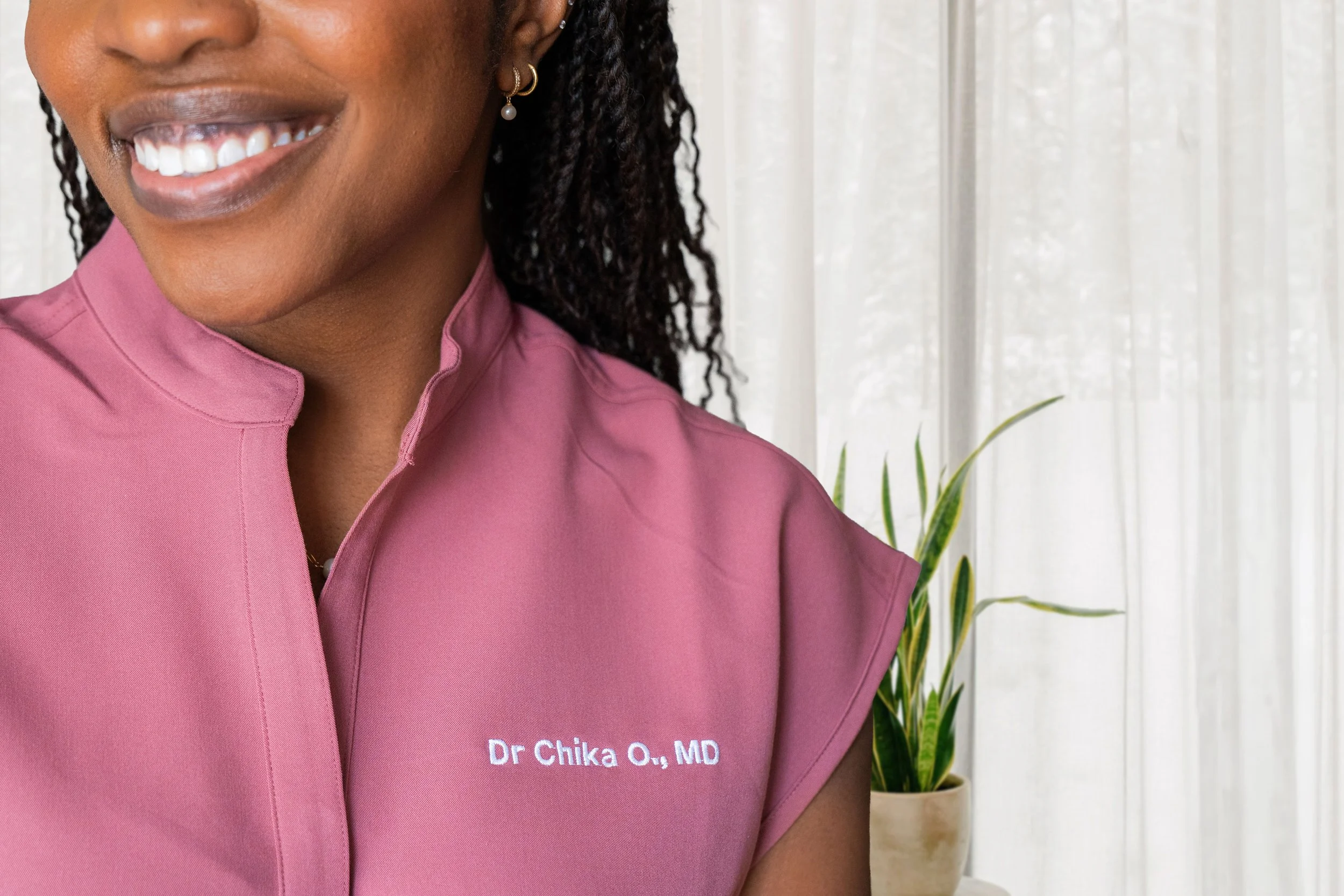
I have always wanted to be a doctor, ever since the tender age of three.
Of course, this was long before I could meaningfully conceptualize what being a physician entailed; the brutally long nights, painfully early mornings, the endless call shifts and personal sacrifices. At three I had not yet had the privilege of working in the labour and delivery wards, ushering in new life, or in the palliative care ward, holding someone’s hand as they took their final breath. All I knew then, and what remains true today, was that I was placed on this earth to help and to heal, and medicine provided me the clearest path of executing this vocation.
As a little girl I would happily flip through my father’s anatomy textbooks from nursing school, meticulously poring over the details of the human body - the bones, muscles, organs, and their accompanying function all brought me great delight. When my maternal uncle, Dr. Livinus Obilo, informed me that as a neonatologist, he spent his days caring for the sickest and tiniest babies in the hospital - I was sold (I possessed a magnetic affinity for newborns, almost as soon as I stopped being one). Thus began an unyielding twenty-year march towards my dreams of becoming a medical doctor, through the turbulent storms of academia, assessments, and even moments of trepidation.
But my infatuation with poetry, writing, and storytelling shared the same genesis as my medical school dreams. Before my tenth birthday, I had amassed a collection of well-loved journals holding the thoughts of a third-born, Nigerian-Canadian daughter trying to decipher her life through simile and metaphor. Between the stanzas were childlike doodles of the world that enveloped me, random notes-to-self and chicken-scratch ideas of potential short stories.
I wanted to be a writer, and not just any writer - but a writer who travelled the world telling stories and sharing poetry, like Maya Angelou. I wanted to perform, like the poets on Def Poetry Jam, and publish novels under a mysterious pen name that would be translated into a hundred different languages. Similar to my medical ambitions, I wanted to use art to heal, and understood intimately and early in my life that it was the perfect conduit for doing just that.
At ten years old, I witnessed my maternal grandmother succumb to lymphoma, while my mother was swept into a deluge of grief. For weeks I scanned my mother’s face to try and find the features that rendered me comfort: her signature smile that happily took abundant real estate on her face, her plump cheeks that rose and fell with her buoyant laughter, and her steady eyes that let me know everything will be alright, with just a quiet, loving look.
But when my grandmother died, those features were seemingly erased in an instant, and my mother felt unrecognizable to me. I craved the familiarity of her smile, her laugh, her gaze - all the things that anchored me. Alas, in her grief, I felt lost, too. So I defaulted to the only way I knew how to emote, how to draw a bridge across the moat of my mother’s sadness to bring her back to me: I got to writing.
When I gave my mom a poem from the perspective of my grandmother, consoling her children from heaven, I saw the early cracks of a solace break through my mother’s heartbreak. She held me, with tears staining her cheeks, and thanked me for bringing her momentary comfort. It would still take years for my mom to learn to navigate the world without her own mother, but I knew right then and there that words, and art, hold immense power. And as we know, with great power comes great responsibility - so I protected and nurtured my craft judiciously, promising to hold it close irrespective of where the professional cards fell.
Of course, having a traditional Nigerian father, they fell categorically into medicine. When my dad caught wind of my poetic ambitions that threatened a career as a doctor, he shot those dreams out of the sky like a heat-seeking missile.
“Become a doctor first,” he sternly told me as a child, “then you could write whatever you want.”
So I did. I focused my academics in the sciences as early as high school, got my bachelor’s degree in Health Sciences at McMaster University, and marched dutifully into the halls of the Faculty of Medicine at the University of Toronto. Just to ‘spice things up’ (i.e. - nearly burn myself out for my father and the academic world’s approval) I concurrently pursued my master’s in health systems leadership and innovation during medical school. Don’t get me wrong, I loved studying medicine, was genuinely passionate about my master’s studies, and knew from the moment I stepped into the Medical Sciences Building on campus that I was exactly where I was destined to be. But anyone that knows me knows that I am not one to forfeit my convictions easily, and I was deeply committed to keep writing throughout the pursuit of my dreams of being a doctor.
In elementary school, I performed poems at school assemblies and submitted short stories into writing competitions. In high school, I consistently wrote and published poems on Facebook that captured my unhinged era of unrequited teenage love (much to my current horror). In university I wrote poetry fervently, competed on a nationally-ranked slam poetry team, gigged across the country from bars to street corners, and coached slam poetry at a local high school. I would host poetry nights and invite the whole campus, desperate to create community through our shared love of oration and words. Science owned my heart, but writing was my soul.
So, as I entered into medical school, I continued to crave my creativity even more urgently as the demands of studying medicine crept in from every corner. At the end of the longest days of studying, I would sink into reruns of Def Poetry Jam and YouTube videos of Sarah Kay’s most iconic works. For every challenging moment in medical school there was an accompanying poetic elixir.
A heartbreaking case that makes you feel helpless and shaken beyond the wards? Try Instructions for a Bad Day by Shane Koyczan.
Your attending wouldn’t let you take a break during a busy shift and your body is aching with exhaustion? Try Poet Breathe Now, by Adam Gottlieb.
You’re feeling anxious after a brutal exam that you genuinely prepared for? Try A Bird Made of Birds by Sarah Kay.
You name the ailment, I’ll name the poetic treatment.
And yes, I strove to keep writing as devotedly as I consumed poetry, even publishing poetry videos of my own and writing essays on my experiences at U of T, but in the end the demands of my training would edge out the time needed to write.
When I started medical school I was determined to pursue paediatrics, then pivoted early towards obstetrics and gynaecology, and eventually landed on obstetrical medicine through a general internal medicine path.
Towards the final months of medical school, I felt more doctor than poet. Actually, I felt more doctor than anything else, maybe even human. I was perfectly curated to view the world through a critical medical lens, biweekly exam after biweekly exam, OSCE (Objective structured clinical exam) after OSCE. Poetry felt like a distant echo through the howling winds that swept through U of T’s St. George Campus.
This was until my very last rotation in my clerkship year, right before I was set to apply to residency.
To be continued…