

Three Small Words: A Doctor’s Take on AI and the End of Certainty
“Do you really think this could happen?”
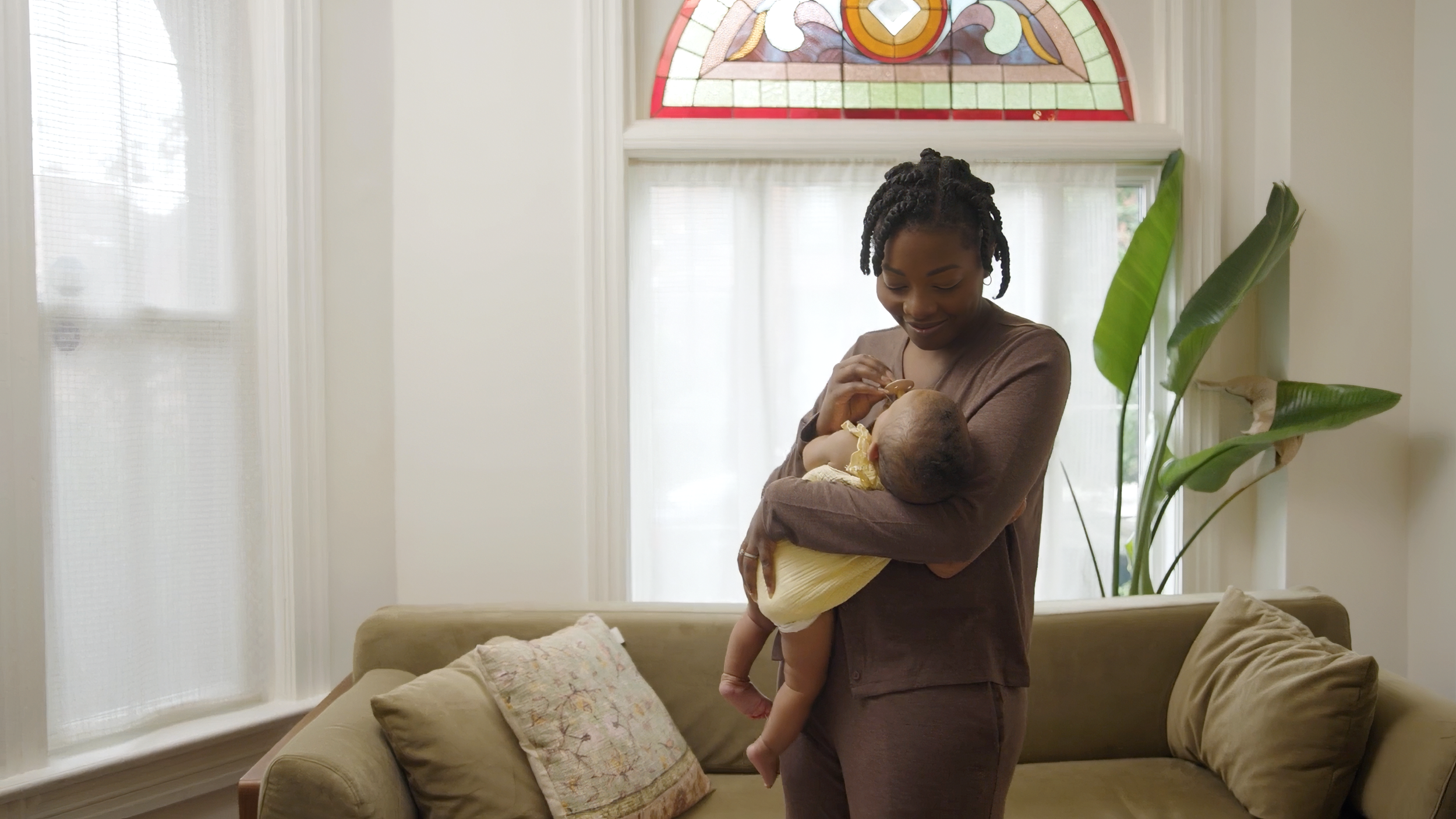
I said to my husband, Dale, as I cradled our 8-month old daughter, Coco, in my arms. She playfully swiped for my glasses and twirled them in the air, her enchantment evident with giddy squeals. Our petite kitchen often became the venue for our quickest moments of connection: unpacking viral headlines, discussing podcasts we mutually adored, debating geopolitical head-scratchers and figuring out our kids’ lunches for the week. As with many married couples raising small children, these chats are often punctuated by splitting up a quarrel, pausing to kiss a boo-boo or wrangling a baby gone rogue.
That morning, however, I bypassed our normal pleasantries and urgently looked to Dale for reassurance on a topic that made my heart and mind race: the looming threat of superior artificial intelligence (AI) and concerns around imminent human extinction. I had just finished skimming an article on the recent exit of Jacob Coxon, one of Anthropic’s AI safety researchers, and now outspoken whistleblower. His dire warnings about AI super-intelligence, recursive self-improvement, and the glaring lack of guardrails in the global AI race to the top were broadcasted, clipped and reposted on every social media platform. Coxon predicted that AI may wipe out the human race within the next decade - a sentiment echoed by AI safety researchers before and since. As a mother, my mind immediately thought of my three small children, their uncertain future, and my instinctive determination to do everything to keep them and future generations safe.
Giving pause for Dale’s contemplation, I drank in the features of Coco’s face: the left-sided dimple like her father, her big brother’s milk-chocolate eyes and big sister’s gummy smile. For a second my concerns melted away; babies have that uncanny ability to reduce the quandaries of the world to dust, for even a fleeting moment.
“It’s definitely concerning,” Dale responded, “But I believe there are things we can do, collectively, to stop things from getting that far.” Forever the optimist, Dale often looks for solutions and a voice of reason instead of pausing too long on a problem, or being immobilized by fright. This quieted my mind temporarily, just long enough for me to whisper three simple words: I am scared. I held Coco tighter as she nuzzled into my sweatshirt.
Dale let out a commiserate sigh, sharing his fears around the topic too, before pulling me in for a reassuring hug and turning on a tech podcast that tackled the issue head-on. He always edged towards curiosity in moments of fear, a skillful tactic I’ve spoken about on numerous stages as an international public speaker in leadership, neuroscience, and resilience. I decided to lean into my curiosity as well, even if the truth proved terrifying.
Before long, we were swept back into the rhythm of our weekday mornings, flipping pancakes, packing lunches and ushering the kids out the door to school.
As the ensuing day slipped by, I would be intermittently submerged in the waves of anxiety: could AI really lead to our extinction? What is being done to address these grave concerns? What can I as a parent and social participant do to safeguard our collective future? Why would any organization seek to create something that could destroy all civilization? Who really wins in this race?
I thought back to each time in the past two years that I had indulged in ChatGPT or Claude: helping me edit e-mails for optimal professionalism and tone, guiding me through a baking blunder when the cinnamon buns overcooked in the oven, brainstorming business ideas, and (especially in the last several months of postpartum) helping me decipher what may be going on with my colicky newborn. I indulged without a care in the world, taking advantage of tools that seemed all-too eager to assist me with any challenge, big or small.
Even when I didn’t leverage the apps in a momentary crisis, AI had seemingly extended its tendrils into most areas of our technological lives; search engines, algorithms on social media, targeted advertisements, note-taking tools, virtual assistants… the list goes on and on.
But looking back, especially in the context of these dire warnings and the feeling that we have crossed a bridge that has since collapsed, I most often wonder: was it all worth it?
I would hazard a guess that most of us would say “absolutely not”, if the calculus has shifted from “AI will cost us our jobs” to “AI may cost us our lives”.
Yet, as I chase my crawling infant across our living room floor, I am greeted with a resolve and hope that pulls me from the tides of the unknown.
I do not claim to be an expert in artificial intelligence. I do not claim to know the intricate complexities of AI or even how a man-made machine can gain self-determination.
What I do know is this: I am a resident psychiatrist, and that means that I have developed an expertise on how our brains respond to uncertainty, what it takes to achieve meaningful resilience, and how to acquire the dexterity to navigate the unknown. In essence, my expertise is the counterpoint to AI - it is in being human. Ten years into my medical training, this has lead me to deeply understand that falling back on our humanity is at the heart of what will ultimately keep humanity moving forward; our ability to hold opposing truths, our ability to reach for others, and our ability to surrender to the awe that surrounds us.
So when Dario Amodei, the CEO of Anthropic, posits that AI can lead to miraculous medical breakthroughs for most diseases, but advancements need to be paced because of the unforeseen threats, I am able to create space for both the comforting and uncomfortable realities. Two things can be true.
I can appreciate how seamlessly Claude AI can summarize lengthy PDFs, while also craving the lost art of hand-written annotations on a stack of dog-eared papers.
I can understand that great innovation requires great risk, while also holding firm that said risks need to be mitigated carefully.
I can be a freshly postpartum, desperately sleep-deprived mother and physician, who grapples with anxiety for the future while also wielding hope.
I can be scared and courageous all at once.
As the day sank into dusk, my three little ones nestled into my lap for our bedtime routine: an animated reading of their chosen picture book, a playful rendition of “Skinna-ma-rink”, two hugs, two kisses, and endless I love yous. They always ask for just one more hug, and as Dale joins in with a loving embrace, I am reminded of all the things that AI simply cannot replicate or replace. This is the human connection that buoyed us through the gripping moments of fear that morning. Therein also exists awe - the understanding that we are a part of something greater than ourselves. Experiencing awe, alongside connection, quiets a troubled mind, loosens the neurological grip that the unknown has on us, and beckons us back to the present.
Reflecting on the fear that I named that morning, the three small words that hung between Dale and I, I realized that sharing the weight of my worries didn’t necessarily erase them, but steadied them. Continuously turning back to my anchors of connection and awe - Coco’s cuddles, Dale’s bear hugs, calls to my sister so I can hear the sweetness in her laughter - gave me the equanimity I needed to face the uncertainty. It also gave my brain just enough breathing room to pivot from frozen-with-fear (hello, amygdala) into action (hey, prefrontal cortex!).
No, I still don’t have all the answers, and I don’t know what will unfold in the next decade - no one does. But I do know that curiosity is a powerful antidote to fear, and remaining curious about AI (and other existential threats like climate change, geopolitical instability, etc.) will enable me to continue to ask the hard questions. It will invite me to interrogate not only my own day-to-day decisions, but also the policymakers who can influence regulatory discourse and safety measures. It will lead me to have honest and vulnerable conversations with those around me, and ensure I am a soft place for their fears to land without judgement.
It will give me hope during uncertain times. It will give me hope for humanity.
And for those who are at the helm of AI advancement, holding our futures in their palms and pockets, I pray that they, too, become evermore curious. Not just about the economic benefits of creating the most advanced technology, but of the greater cost to us all.